
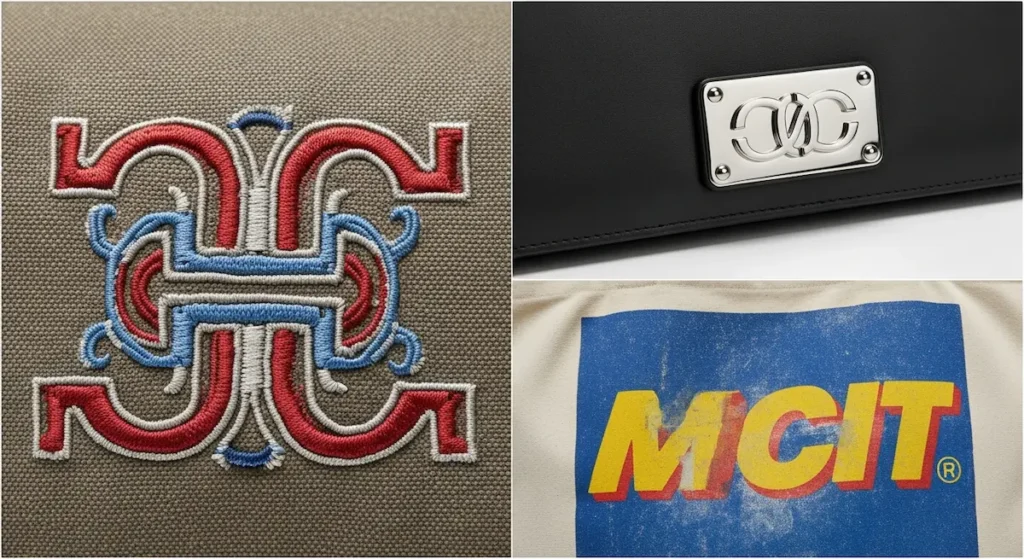
You can have the best fabric and the most durable stitching, but if your logo looks cheap, your bag looks cheap. The logo is the handshake of your brand; it’s often the first thing a customer sees.
For brands and Amazon sellers, choosing the right custom bag logo technique is not just about aesthetics—it’s about matching the “vibe” of your product with the right manufacturing process. A luxury cosmetic bag needs a different logo approach than a rugged tactical backpack.
At TIMMY, we offer a full range of in-house branding solutions. Here is our expert guide to the top 5 logo techniques for 2026.
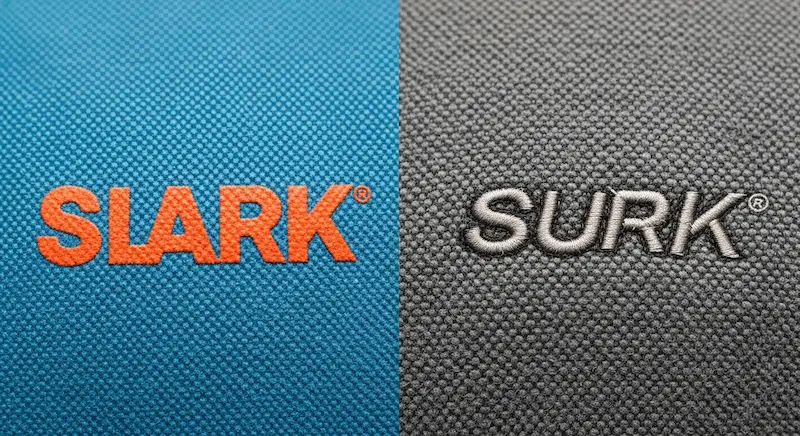
1. Screen Printing: The King of Bulk
What it is: Ink is pushed through a mesh screen onto the fabric surface. It is the most common method for tote bags and promotional items.
Best For: Canvas tote bags, polyester drawstring bags, and simple, bold logos (1-3 colors).
Pros: Cost-effective for large quantities; bright, vibrant colors; Pantone matching is easy.
Cons: Not suitable for complex gradients or photos; can crack over time if low-quality ink is used.
2. Embroidery: The Mark of Quality
What it is: Your design is stitched directly into the fabric using high-speed computerized machines.
Best For: Backpacks, hats, and heavy canvas bags. It adds texture and a 3D effect that printed ink cannot match.
Pros: Extremely durable (will never fade or peel); looks expensive and premium.
Cons: Cannot render very fine details or tiny text (text must be at least 5mm high); expensive for large logos.
3. Debossing & Embossing: Subtle Luxury
What it is: A metal die is pressed into the material under heat and pressure to create a sunken (debossed) or raised (embossed) effect. No ink is used.
Best For: PU leather cosmetic bags, genuine leather tags, and premium faux-leather patches.
Pros: Elegant, subtle, and permanent; gives a “retail brand” feel.
Cons: Only works on materials that react to heat/pressure (PU, Leather); does not work well on nylon or canvas.
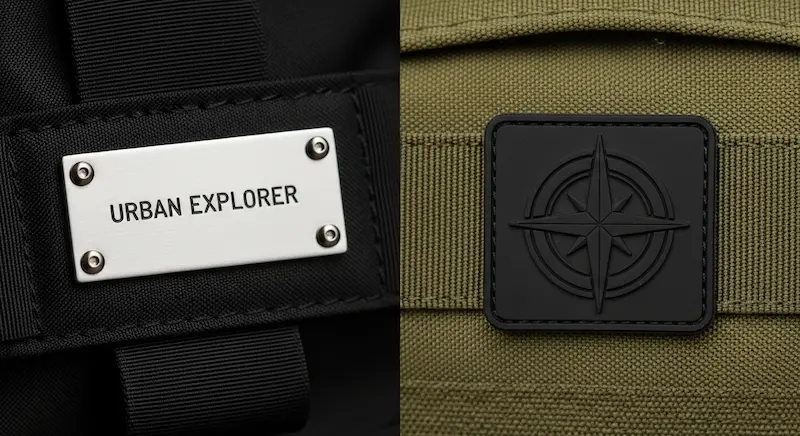
4. Metal Plates & Rubber Patches: High-End Hardware
What it is: A separate logo piece (made of zinc alloy metal or PVC/Silicone rubber) is sewn or riveted onto the bag.
Best For: Luxury tech backpacks (Metal) or outdoor/tactical gear (Rubber).
Pros: Highest perceived value; very durable; rubber patches are waterproof and rugged.
Cons: Higher MOQ (Minimum Order Quantity) and mold costs for the custom plate.
5. Heat Transfer & Digital Print: Unlimited Color
What it is: A digital image is printed onto a special film and then heat-pressed onto the bag.
Best For: Complex, multi-color designs, photographs, or logos with gradients.
Pros: Can reproduce any image perfectly; good for small runs.
Cons: Can feel “plasticky” or like a sticker; less breathable than screen printing.
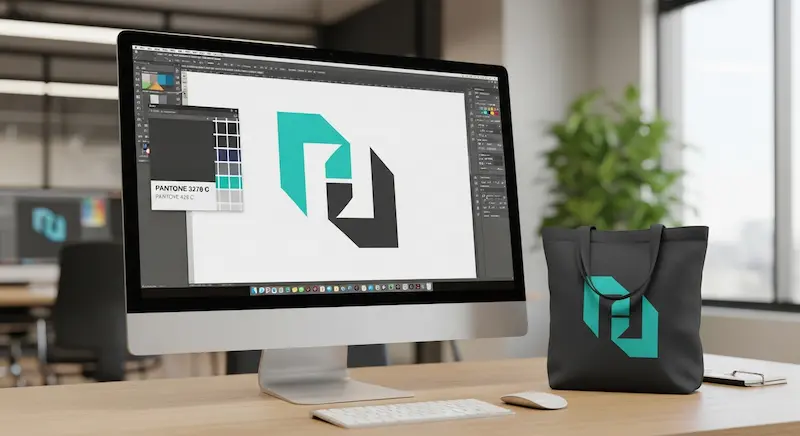
How to Specify Your Logo in a Tech Pack
When sending your design to TIMMY, clarity is key. In your Tech Pack, always include:
- Vector File: AI or PDF format (not JPEG/PNG).
- Dimensions: Exact width and height (e.g., “Logo Width: 8cm”).
- Position: “Center logo 5cm down from the top seam.”
- Pantone Colors: Exact PMS codes for every color in the logo.
Conclusion: Choose the Right Mark
Your logo technique tells a story about your brand’s quality. Don’t let a great bag be ruined by a cheap-looking logo.
At TIMMY, we have the machinery and expertise to execute all these techniques in-house. Not sure which one fits your budget and fabric? Contact us for a consultation and sample photos.