
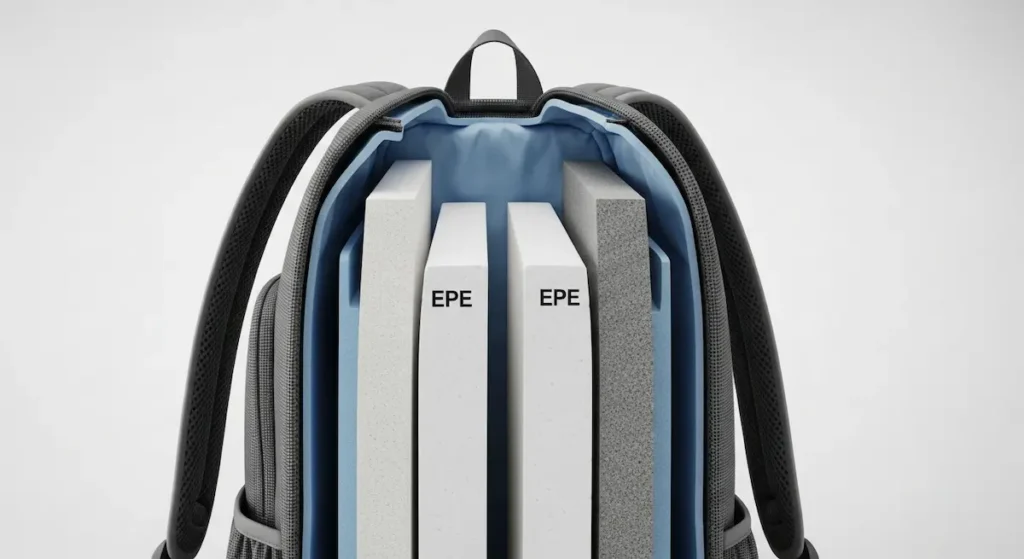
Have you ever wondered why some backpacks stand up straight and feel comfortable, while others sag and dig into your shoulders after a month? The secret isn’t usually the outer fabric—it’s what’s inside.
In the industry, we call this the “skeleton” of the bag. Bag foam padding and interlining are the hidden heroes of manufacturing. They define the structure, comfort, and protection of the product. Yet, because they are hidden, many cheap factories use this as an opportunity to cut costs by using inferior materials.
At TIMMY, we believe transparency goes all the way to the core. Here is your guide to the materials that give your bag its shape and soul.
1. The “Muscle”: Common Foam Types
We use different foams for different parts of the bag. Knowing the difference helps you write a better Tech Pack.
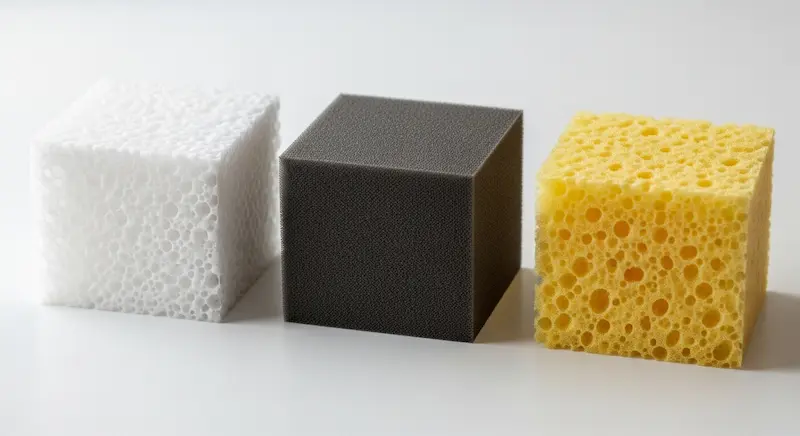
EPE Foam (Pearl Cotton)
What it is: Expanded Polyethylene. It looks like white, lightweight foam with a slight pearl sheen.
Best For: The main body of backpacks, laptop sleeves, and cooler bags (it has thermal insulation properties).
Why use it: It provides excellent shock absorption and gives the bag “volume” and shape without adding weight. It is cost-effective and standard for most bags.
EVA Foam
What it is: Ethylene Vinyl Acetate. A dense, rubber-like foam that is more expensive.
Best For: Shoulder straps and back panels of high-end tech backpacks.
Why use it: It has “memory.” It compresses under load but springs back to its original shape, offering superior comfort. It is also waterproof and doesn’t rot.
PU Sponge
What it is: Soft, porous foam (like a kitchen sponge).
Best For: The layer directly behind the air-mesh on the back panel.
Why use it: It is breathable and soft against the body, but offers no structural support.
2. The “Bones”: Stiffeners & Reinforcement
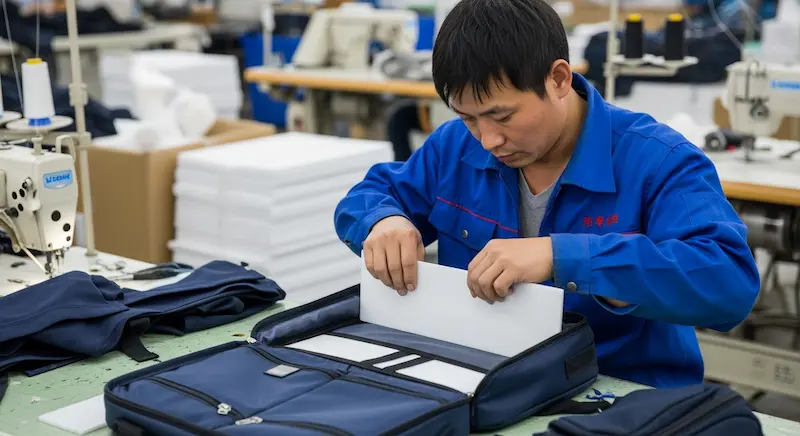
Sometimes foam isn’t enough. If you want a bag to stand up on its own or have a flat bottom, you need stiffeners.
- PE Board: A rigid, plastic sheet. We sew this into the bottom of travel bags or the back panel of hiking packs to prevent sagging. It acts like a spine.
- Non-Woven Interlining: A paper-like material glued to the back of thin fabrics (like silk or lightweight nylon). It gives the fabric more “body” and weight, making a cheap fabric feel more premium.
3. The “Pinch Test”: How to Spot Quality
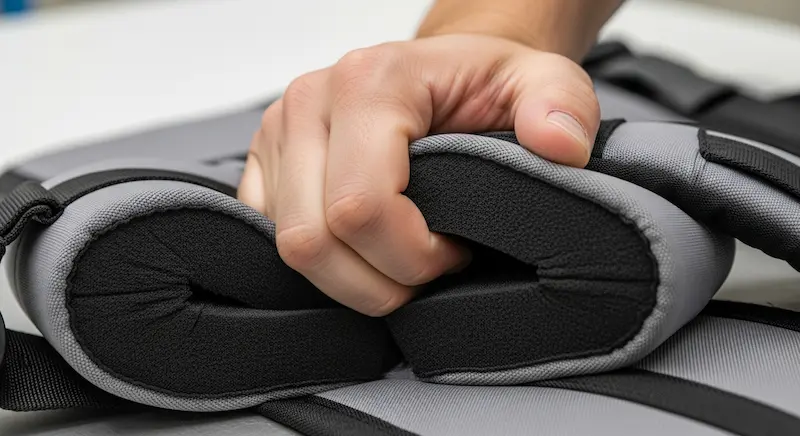
How do you know if a factory is using good foam? Do the “Pinch Test.”
Squeeze the shoulder strap of a sample. Does it feel firm and bounce back immediately? That’s good quality (likely EPE or EVA). Does it feel “crunchy,” uneven, or go completely flat like a pancake? That might be Recycled Waste Cotton.
Some unethical factories use “waste cotton” (shredded fabric scraps glued together) to fill straps. It is heavy, absorbs water (causing mold), and falls apart quickly. TIMMY guarantees 100% new, clean foam materials in every bag. We verify this in our Quality Control process.
Conclusion: It’s What’s Inside That Counts
Great design attracts a customer, but great structure keeps them. By choosing the right bag foam padding and stiffeners, you ensure your product maintains its premium look and feel for years.
Don’t let your brand sag. Partner with a manufacturer that builds quality from the inside out. Contact TIMMY to discuss the best internal materials for your next project.