
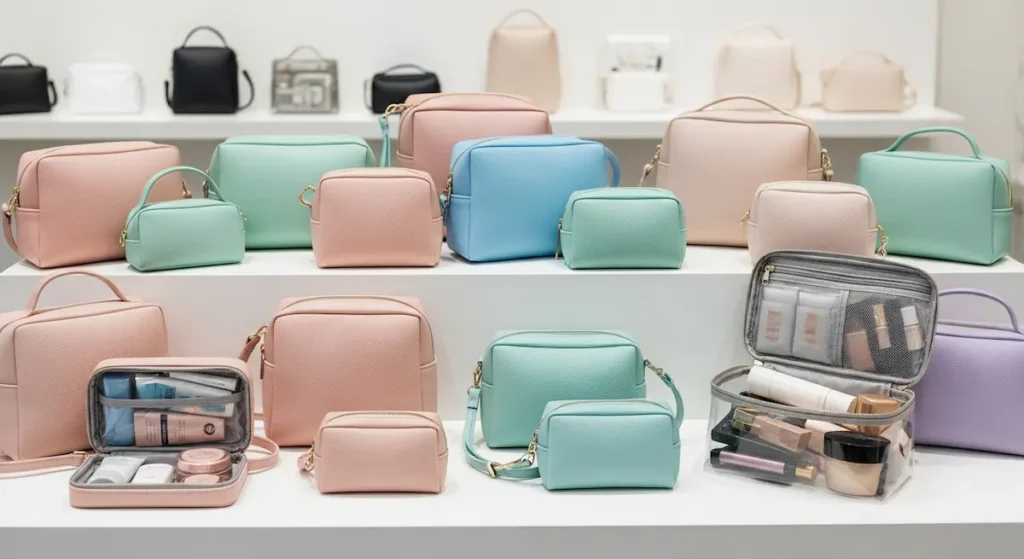
A cosmetic bag needs to suit the products it holds, the way it opens and the conditions in which it will be used. Discuss these details before choosing the outer material or approving the sample.
For a beauty-brand project, consider wipe-clean surfaces, contact with cosmetics, storage conditions, zipper operation and how the filled bag keeps its shape. These are development questions—not performance guarantees that apply to every material.
1. PU Surface Durability: Confirm the Material and Test
PU surfaces can vary in their resistance to peeling, cracking and moisture-related ageing. Review the exact material grade and intended storage conditions, rather than judging durability from appearance alone.
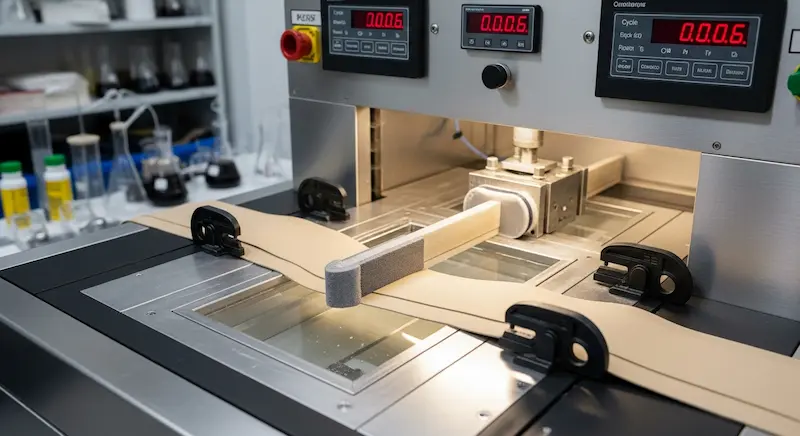
If ageing resistance matters to your project, agree on a test method, exposure conditions and acceptance criteria with a qualified laboratory. Do not convert an accelerated test into a guaranteed number of years of use without supporting evidence. Read our durability-test planning guide.
2. Linings: Distinguish Wipe-Clean from Leak-Proof
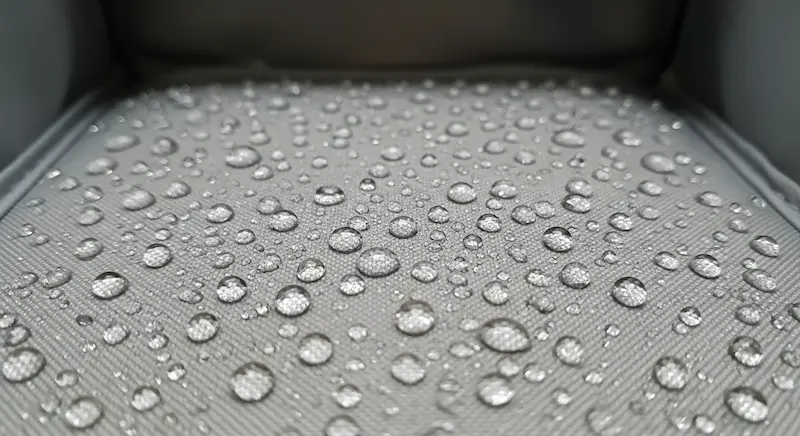
A lining described as wipe-clean is not necessarily leak-proof. Seams, needle holes, zippers and the opening can let liquid pass even when the lining material resists it. Test the finished construction against the intended use.
Possible lining materials to discuss include:
- EVA sheet lining: Compare surface feel, flexibility, cleaning compatibility and seam construction using a project sample.
- Coated fabric lining: Confirm the fabric and coating specification, cleaning instructions and finished-bag performance required.
3. Curved Piping and Construction
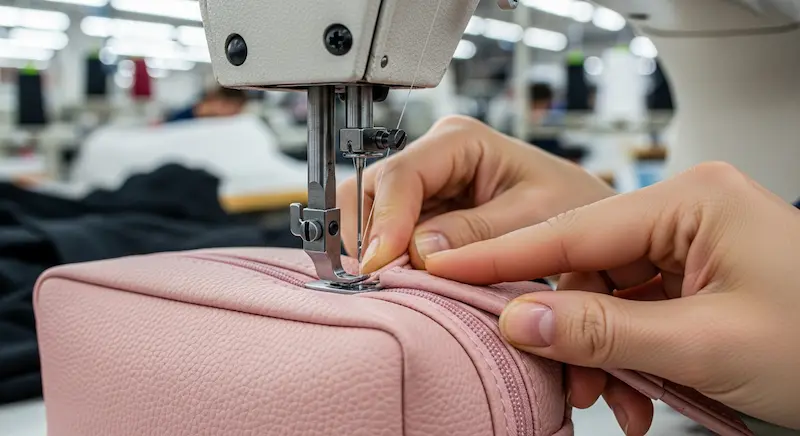
Cosmetic bags often have rounded corners. To maintain structure, we insert a plastic tube called “piping” into the seam. The challenge in cosmetic bag manufacturing is sewing this piping smoothly around tight curves without wrinkling.
Review curved seams on a physical sample: look for even piping, smooth corners and a shape that remains practical when the bag is filled. The construction and sewing method should be selected for the design.
4. Zippers: Nylon vs. Metal
Compare coil and metal zipper options on the actual curved opening. Check operation, puller clearance, hand feel and compatibility with the fabric. A brand name or metal finish alone does not establish durability.
Conclusion: Quality is in the Details
Approve the material, construction, dimensions and agreed tests together. Explore cosmetic bag formats or send Timmy Bags your project details for a reply within 24 hours.