
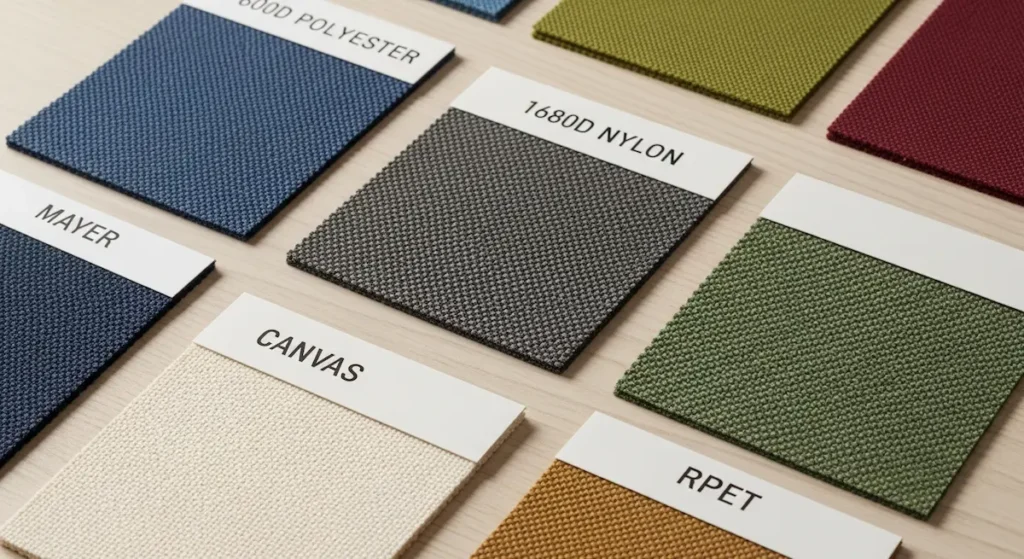
Choose a bag fabric around the intended use, required feel, branding method and budget. A fiber name or denier number is only part of the specification.
For cosmetic bags, toiletry organizers and promotional pouches, compare the outer fabric, lining and coating as a complete construction. Ask for swatches and a project sample before approval.
1. What Does Denier Mean?
Denier describes linear mass density: the mass in grams of 9,000 meters of fiber or yarn. It is not the finished fabric’s thickness, weight per square meter or a durability rating. See ASTM’s yarn-number conversion table for the unit definition.
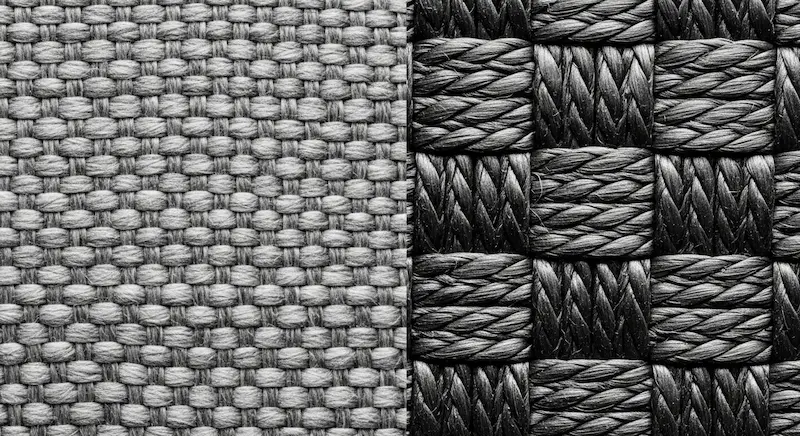
Numbers such as 210D, 600D and 1680D describe yarn size. The actual fabric also depends on fiber properties, weave, density, finish and coating. Higher denier alone does not prove that one fabric is stronger or more suitable than another.
2. Compare Nylon and Polyester by Specification
Nylon and polyester are both options for bag development. Compare the actual grades rather than assuming all nylon is premium or all polyester is low quality.
Feel and appearance: Review texture, drape, color, sheen and the intended print or logo on a swatch.
Performance: Define the relevant abrasion, tear, seam, color-transfer or other tests. Ask for results that relate to the selected fabric, not a different product with the same fiber name.
Commercial fit: Confirm availability, color allocation, quantity and the effect on the finished sample and quotation.
3. Coatings Do Not Make Every Bag Waterproof
PU and PVC coatings can produce different surface feel, weight and flexibility depending on their formulation and construction. Neither name alone guarantees market compliance or service life.
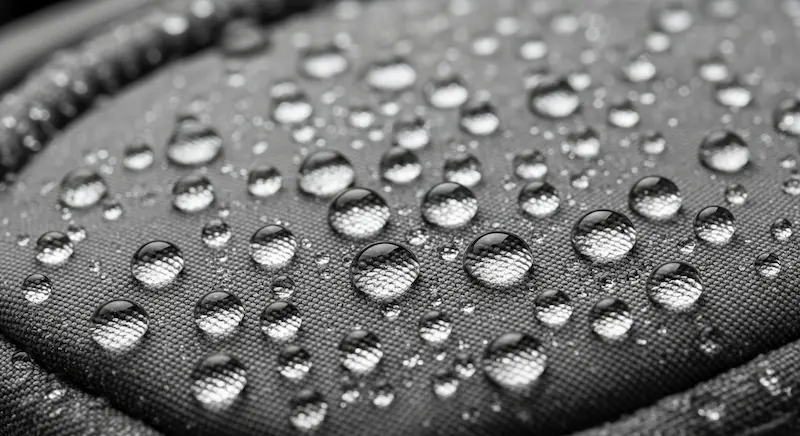
Water beading on fabric is not proof that the assembled bag is waterproof. Consider seams, needle holes, openings and zippers, and agree on a finished-product test if water resistance is required.
For restricted-substance requirements, assess the actual material and target market. Do not assume PVC is automatically prohibited or PU is automatically compliant. See our compliance planning guide.
4. Write a Useful Material Brief
Cosmetic or toiletry bag: Specify the contents, desired structure, cleaning expectations and whether any liquid-resistance requirement applies to the finished bag.
Promotional bag: Prioritize the intended reuse, logo result, campaign quantity and packing needs—not simply the lowest fabric price.
Backpack or organizer: Define the load, attachment points, internal support and protection requirements. See our backpack guide.
Recycled or organic content: Confirm the composition and documentation for the specific project. A material name does not support an unqualified “eco-friendly” claim. Read the material-claims guide.
Confirm the Sample Before Production
Record the chosen fabric, coating, lining and agreed tolerances in your specification. Review any substitution before it is used.
Send Timmy Bags your project reference and requirements for a reply within 24 hours. Available materials and final specifications are confirmed for your project.