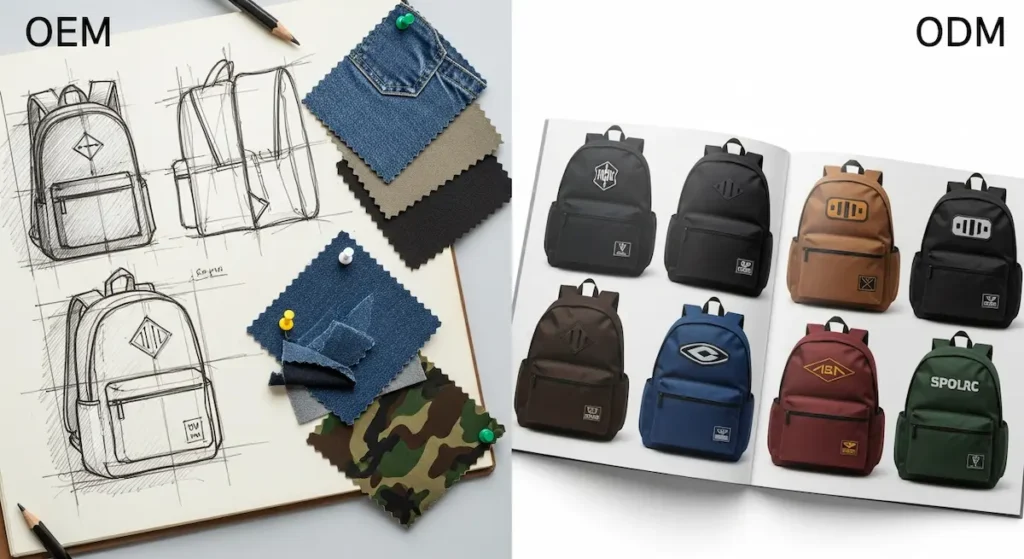
For a custom bag project, decide how much of the starting design you will supply and how much you want to develop with the manufacturer. An existing style reference and a detailed original tech pack lead to different development work.
Suppliers use OEM, ODM and private-label terminology in different ways. Define the deliverables, approvals and rights in writing rather than relying on the label alone.
1. Starting From an Existing Style
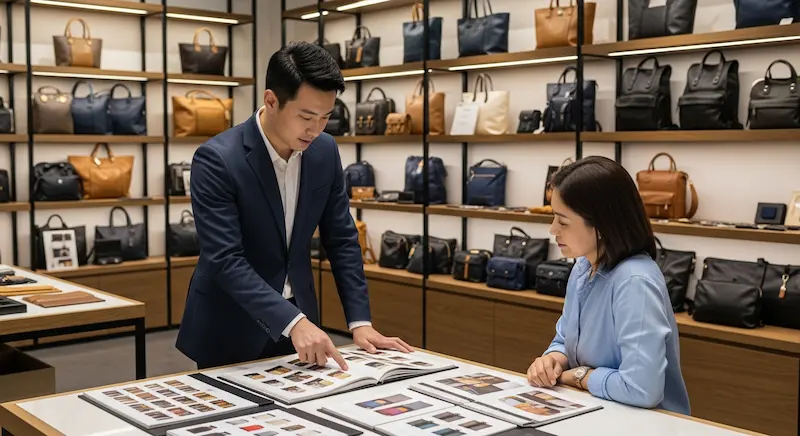
A manufacturer’s existing style can help you communicate the shape or layout you want. You may discuss changes to color, material, dimensions and branding, subject to the construction and sourcing requirements.
This does not mean the bag is in stock, needs no sample or can launch immediately. Changes can require new patterns, material sourcing or testing. A catalog is a reference, not a promise of fixed availability.
Useful when: An existing format meets the main functional need and you want to concentrate development on branding or selected details.
Confirm first: What can change, what is included in development, whether the style is offered to others and whether any exclusivity is agreed.
2. Developing From Your Own Design
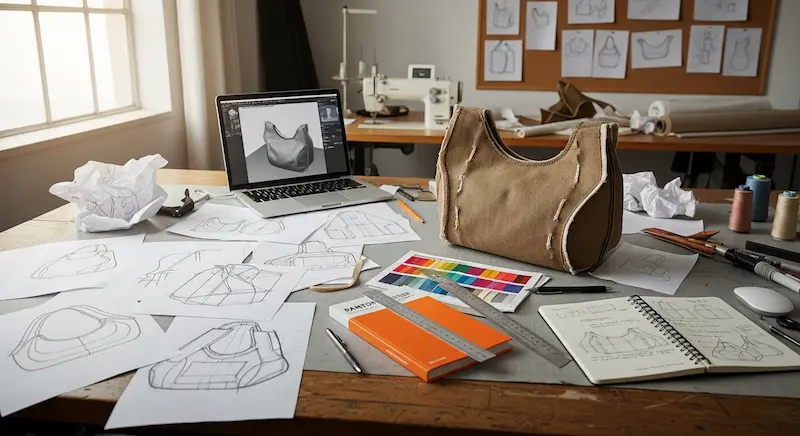
For a design-led project, supply a tech pack, sketches or a clear reference brief. Review construction feasibility, dimensions, materials and logo application before the sample is made.
Useful when: The bag must fit specific contents, provide a distinct layout or match a carefully defined product collection.
Confirm first: The development scope, sample revisions, approved tolerances, costs and schedule. Original design input does not automatically establish patent rights, exclusivity or ownership of every development file; confirm those arrangements separately.
3. Compare the Two Routes on the Same Basis
List the must-have functions, preferred look, target budget, estimated quantity and delivery destination. Compare the actual work required for each route, not a generic claim that ODM is always cheaper or OEM always takes longer.
Ask which decisions remain open and whether a style reference can be adapted without losing the features your customer values. There is no automatic lower MOQ or waived sampling fee simply because an existing format is used.

4. Timmy’s Project Conditions
Standard MOQ is 500 pieces. For one style in multiple colors, the minimum is 300 pieces per color across at least 3 colors (900 pieces total). Sample costs depend on complexity and are quoted before sampling begins.
Sampling normally takes 7–10 days after all details are confirmed. Production normally takes 30–35 days after all details are confirmed. Shipping time is additional.
If a launch date is fixed, share it at the start so the available development and production schedule can be assessed. Do not assume that a four-week launch is possible before those details are agreed.
Explore style references or send your project brief. Timmy Bags responds within 24 hours.