One of the first questions we ask new clients at TIMMY is: “Do you have your own design, or do you want to pick from our catalog?” This simple question defines your entire business model.
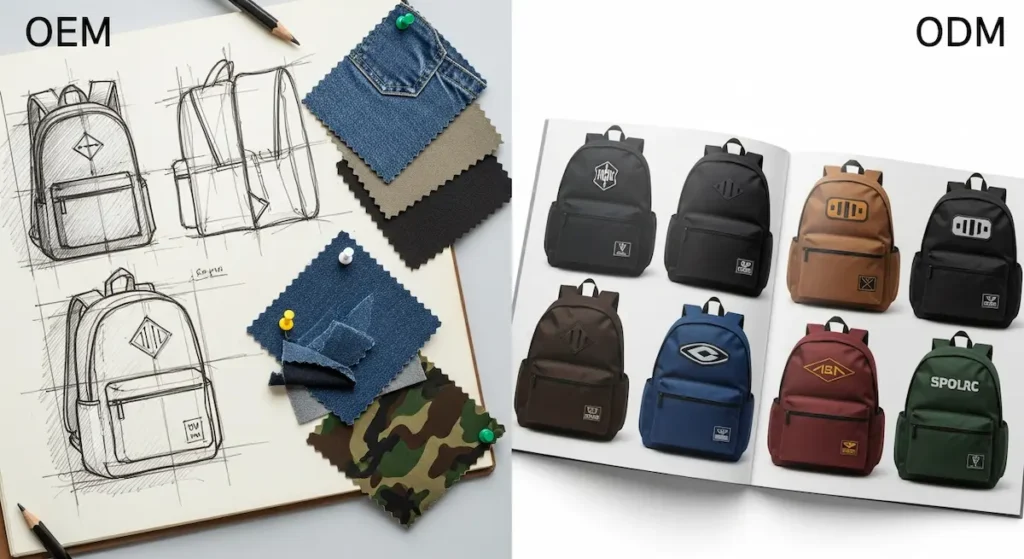
In the manufacturing world, this is the choice between OEM (Original Equipment Manufacturing) and ODM (Original Design Manufacturing). For Amazon sellers and new brands, choosing the wrong path can mean wasted budget, delayed launches, or legal IP battles.
This guide will break down the pros, cons, and costs of each model to help you decide which strategy fits your brand’s current stage.
1. What is ODM (Private Label)?
Definition: ODM means “Original Design Manufacturing.” In simple terms, the factory designs the product, and you just put your logo on it. This is often called “Private Labeling.”
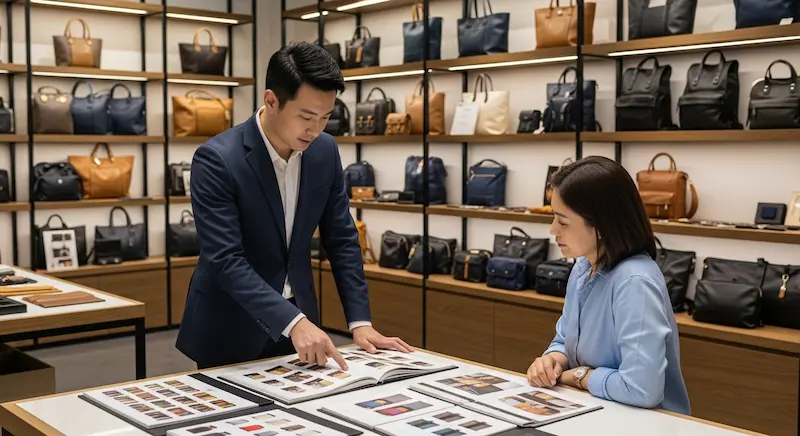
The Process: You browse our catalog of pre-designed backpacks or tote bags. You say, “I like this one, but make it in blue with my logo.” We produce it. Done.
Pros:
- Speed to Market: Very fast. No need for prototyping or pattern making.
- Low R&D Cost: You save thousands of dollars on design and sampling fees.
- Lower MOQ: Since the factory already has the materials and patterns, Minimum Order Quantities are often lower.
Cons:
- No IP Rights: You don’t own the design. The factory can sell the same bag to your competitors.
- Price Competition: On Amazon, 50 other sellers might be selling the exact same bag, leading to a “race to the bottom” on price.
2. What is OEM (Custom Manufacturing)?
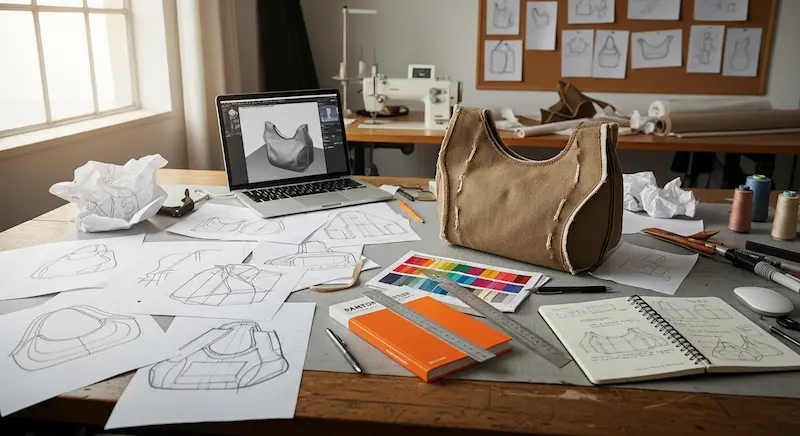
Definition: OEM means “Original Equipment Manufacturing.” You provide the design (the Tech Pack), and the factory manufactures it exactly to your specs.
The Process: You send us sketches and specs. We make a custom pattern, source unique materials, and create a prototype from scratch. Once approved, we mass produce it.
Pros:
- Total Control: Every zipper, pocket, and stitch is exactly how you want it.
- IP Ownership: You own the design. You can file a patent or copyright to stop copycats on Amazon.
- Brand Differentiation: Your product is unique in the market, allowing for higher profit margins.
Cons:
- Higher Cost & Time: Sampling takes time (2-4 weeks) and money.
- Higher MOQ: Custom materials often require higher minimum orders (e.g., 500-1000 units).
3. The Decision Matrix: Which Should You Choose?
Still unsure? Use this simple decision matrix:
Choose ODM (Private Label) if:
- You are a new Amazon seller testing a niche with a low budget.
- You need to launch in 4 weeks or less.
- You don’t have a design team or bag-making knowledge.
- Your main value add is marketing, not product innovation.
Choose OEM (Custom) if:
- You are an established brand looking to scale.
- You have a unique functional idea (e.g., a specific camera bag layout) that doesn’t exist.
- You want to build a long-term “moat” against competitors.
- You require specific sustainable materials (like specific GRS fabrics) not in standard stock.

Conclusion: TIMMY Supports Both Paths
The beauty of working with a large, experienced factory like TIMMY is that you don’t have to switch suppliers as you grow. We support startups with our high-quality ODM catalog for quick wins, and we have a dedicated R&D team to handle complex OEM projects as your brand matures.
Whether you want to pick a style off the shelf or build the next big thing from scratch, we have the production lines to make it happen. Contact us to discuss your strategy.