One of the most common questions we hear from new clients is: “Why do you charge $150 for a sample when the bulk price is only $15?”
It’s a fair question. To the untrained eye, a sample looks just like a finished product. However, in the world of OEM manufacturing, a sample is not just a “product”—it is a complex research and development (R&D) project.
At TIMMY, we believe in transparency. In this guide, we will pull back the curtain on our sample room to show you exactly where your money goes during the prototyping phase.
1. Pattern Making: The “Architectural” Cost
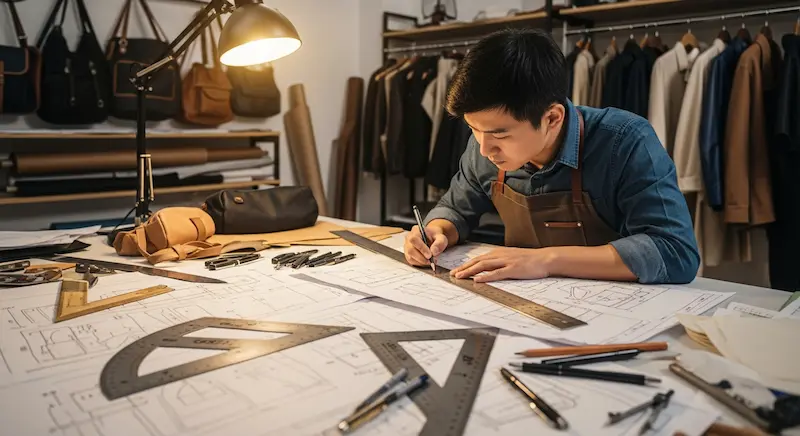
Before a single piece of fabric is cut, the bag must be “engineered.” This is the job of the Pattern Maker (or Paper Grid Master).
Unlike a t-shirt which might have 4 or 5 panels, a technical backpack can easily have 30 to 50 individual components. The pattern maker must:
- Analyze your Tech Pack to understand the structure.
- Draw each panel precisely by hand or using CAD software.
- Calculate shrinkage rates and seam allowances (typically 1cm for sewing, but different for binding).
An experienced Chinese pattern maker commands a salary 3 to 4 times higher than a production line sewer. When you pay for a sample, you are paying for hours of this expert’s time to translate your sketch into a buildable 3D structure.
2. Sourcing Constraints: The “MOQ” Headache
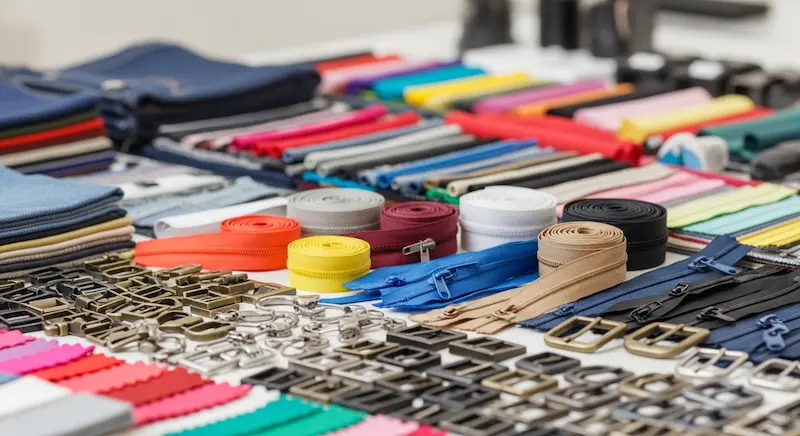
The biggest challenge in sampling is materials. Factories buy fabric in rolls (100 yards+) and zippers in bulk.
When you need just 1 yard of a specific Forest Green 1680D Nylon for a sample, we face two expensive options:
- Sample Surcharge: Material suppliers charge a “cut fee” (often $30-$50) just to cut a few yards from a bulk roll.
- Market Sourcing: Our sourcing team must physically travel to the textile market to find available stock that matches your color. This incurs travel and labor costs.
This is why we sometimes recommend using “available stock colors” for the first prototype to test the shape, and only sourcing the exact Pantone color for the final confirmation sample.
3. The Sample Room vs. Production Line
There is a fundamental difference in how a sample is made versus a bulk order.
Bulk Production (Assembly Line)
In mass production, the process is broken down. One worker only sews zippers; another only sews pockets. They are fast because of repetition.
Sample Making (Craftsmanship)
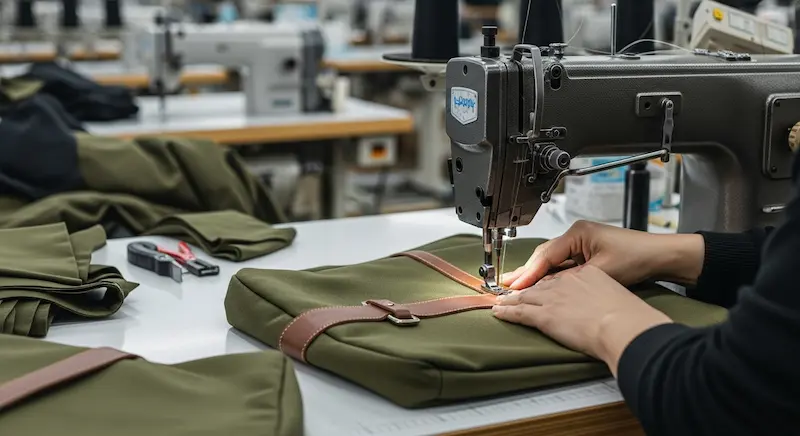
A sample is made by a single Sample Maker from start to finish. This person must be a master of all machines—flatbed, cylinder bed, and bar-tackers.
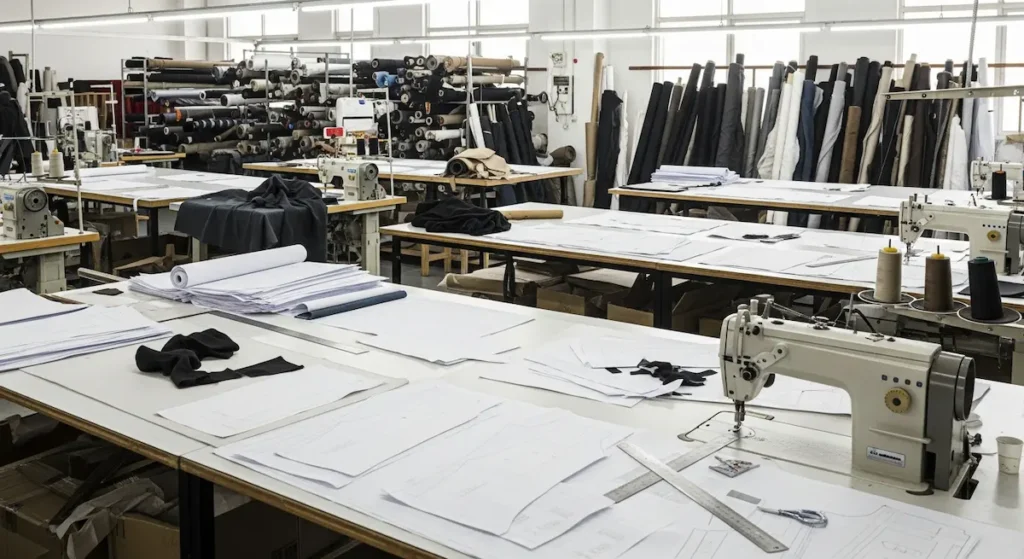
It takes a sample maker roughly 8 to 10 hours to complete a complex backpack that might take a production line only 45 minutes (in cumulative man-hours) to assemble. You are paying for the dedicated time of our most skilled artisan.
4. Our Refund Policy: A Partnership Commitment
While the upfront cost of sampling is high, we view it as an investment in our relationship.
At TIMMY, we have a clear Sample Refund Policy: Once you place a bulk order (meeting our MOQ standards), the sample fee is typically deducted from your final invoice.
This ensures that:
- We filter for serious inquiries (protecting our capacity).
- You essentially get the R&D work for free if the project proceeds.
Sampling is the bridge between a dream and a product. It requires precision, patience, and skilled labor, but getting it right ensures your bulk production runs smoothly.