
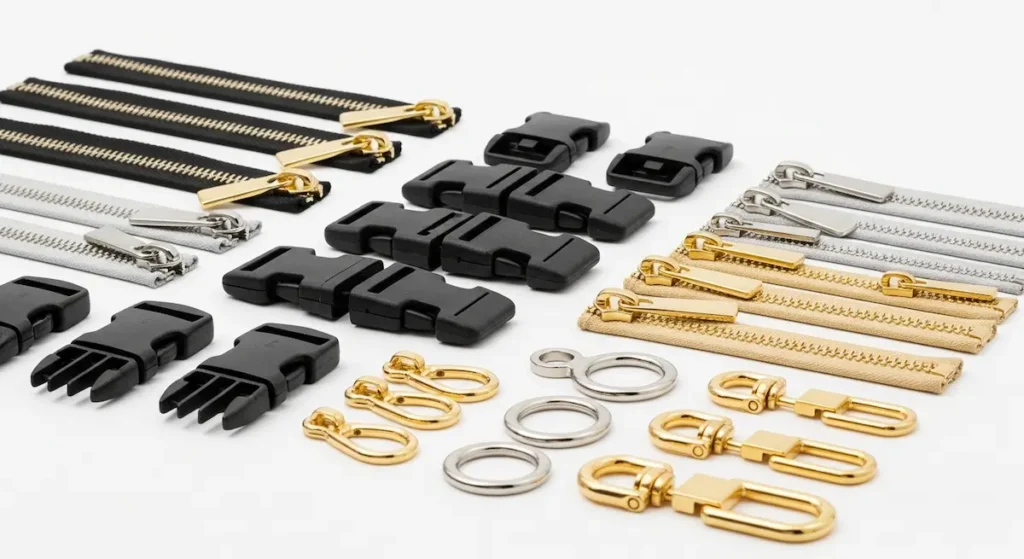
We often say at TIMMY: “Fabric is the skin of the bag, but hardware is the skeleton.” You can use the most expensive ballistic nylon, but if the main zipper bursts or the shoulder strap buckle snaps, the entire bag is useless.
For Amazon sellers, hardware failure is the #1 cause of 1-star reviews and returns. Choosing the right bag hardware is not just an aesthetic choice; it’s a critical quality control decision. In this guide, we will break down the technical differences between “cheap” and “durable” components so you can specify your Tech Pack with confidence.
1. Zippers: The Heart of Functionality
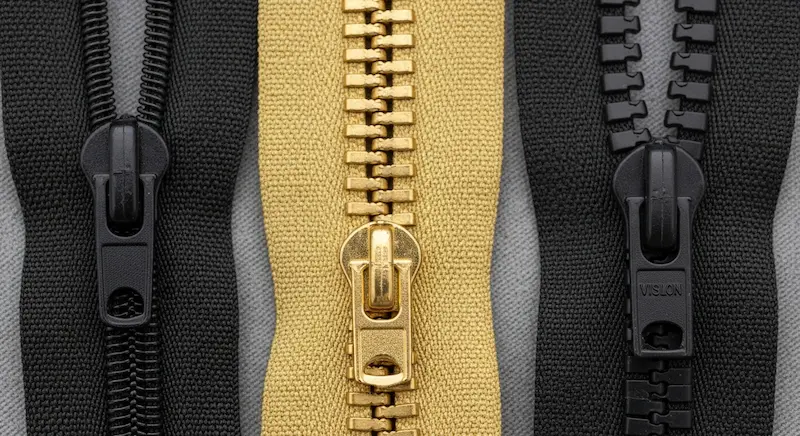
The zipper is the most frequently used part of any bag. There are three main types you need to know:
Nylon Coil (The Industry Standard)
Made from a continuous coil of plastic. It is flexible, self-repairing (if the teeth split, zipping it back and forth often fixes it), and cost-effective. Perfect for backpacks and luggage.
Metal (The Luxury Choice)
Individual metal teeth clamped onto the tape. It looks premium and high-end but is heavier and not as smooth as nylon. Ideal for fashion totes and cosmetic bags.
Vislon / Plastic Molded (The Rugged Choice)
Chunky plastic teeth molded onto the tape. Very durable and resistant to saltwater corrosion. Great for outdoor and marine bags.
Brand Matters: We always recommend YKK (the global gold standard) or SBS (a high-quality, cost-effective alternative). Avoid unbranded “market zippers” at all costs.
2. Buckles: POM vs. PP (Plastic is Not Just Plastic)
Not all plastic buckles are created equal. The material determines if your buckle will survive a drop or shatter like glass.
- PP (Polypropylene): The cheapest option. It feels light, waxy, and brittle. In freezing temperatures, it cracks easily. Avoid this for premium bags.
- POM (Polyacetal / “Acetal”): The professional choice. It is dense, stiff, and makes a satisfying “click” sound. It retains its strength in extreme cold and heat. TIMMY uses POM buckles for all our tactical and travel backpacks.
3. Metal Hardware & Plating: Avoiding Rust
For D-rings, snap hooks, and magnetic buttons, we usually use Zinc Alloy. But the raw metal isn’t the issue—it’s the plating.
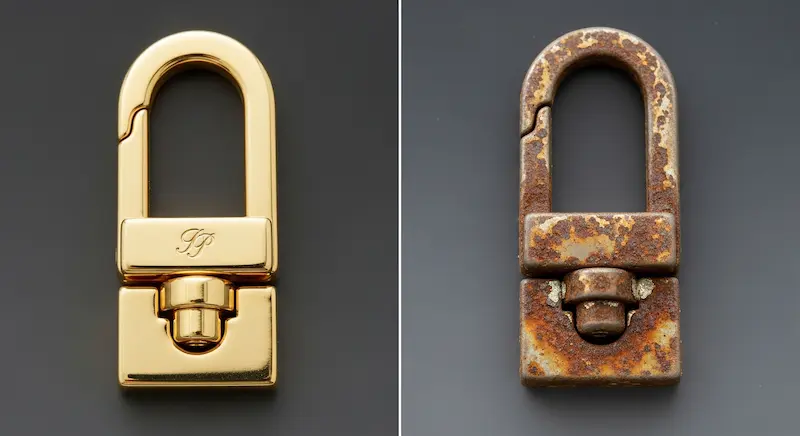
Cheap “barrel plating” (dumping hundreds of pieces in a drum) results in scratches and thin coating. We recommend “rack plating” (hanging pieces individually) for a mirror-like finish.
The Salt Spray Test: If you are shipping by sea or selling in humid climates, ask your factory for a “24-hour Salt Spray Test” report. This simulates years of corrosion to ensure your hardware won’t rust on the shelf.
4. Custom Pullers: The Cheapest Branding Win
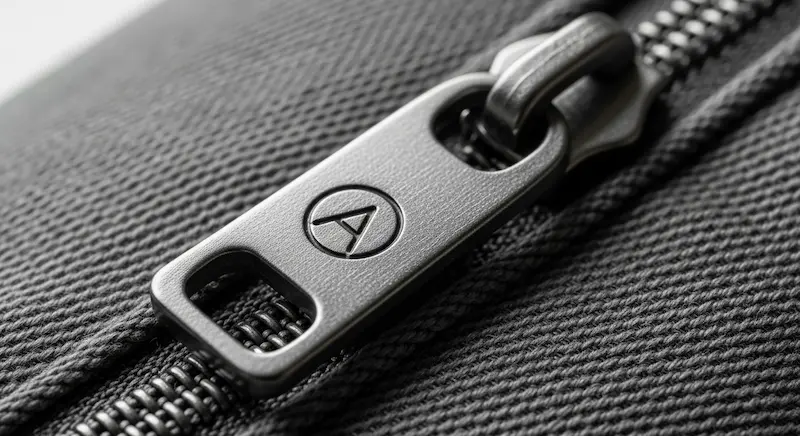
As we mentioned in our cosmetic bag guide, changing a standard zipper puller to a custom-molded one is the highest ROI (Return on Investment) branding move you can make.
A custom metal or rubber puller with your logo costs only cents per unit but instantly makes the bag feel exclusively yours. It turns a generic “white label” product into a branded retail item.
Conclusion: Don’t Let Hardware Be Your Weakest Link
Your customers interact with the hardware every time they open their bag. If it feels cheap, the whole bag feels cheap. If it breaks, you lose a customer forever.
At TIMMY, we have established relationships with top-tier hardware suppliers like YKK and SBS. We ensure every buckle, zipper, and rivet meets our strict durability standards. Contact us to see hardware samples for your next project.