
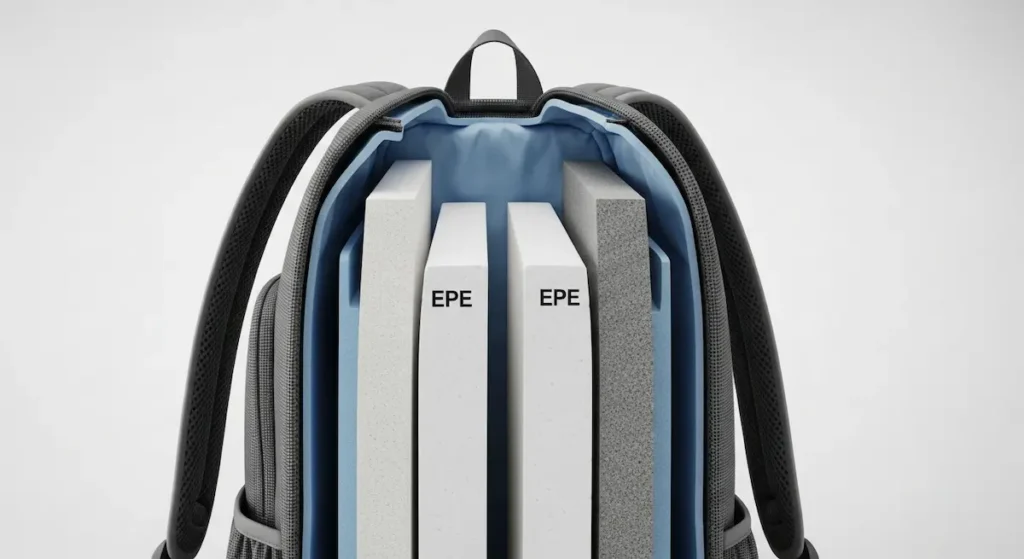
Padding and interlining influence a bag’s shape, comfort and protection. They deserve a place in the specification even though the customer may never see them.
Select the internal construction for the intended contents and use. Material names alone do not tell you the density, hardness, thickness, recovery or durability of the foam supplied.
1. Specify the Foam, Not Just Its Name
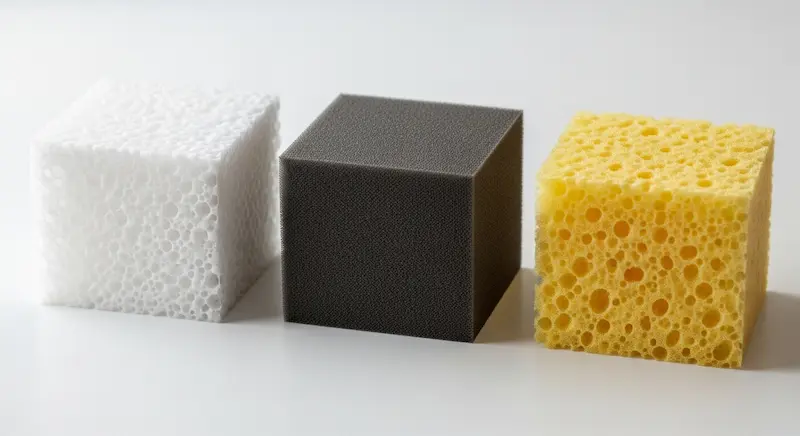
EPE foam: Expanded polyethylene is an option to discuss for cushioning and body structure. Compare the exact grade, thickness and behaviour in the assembled bag; the name does not establish protective performance.
EVA foam: Ethylene vinyl acetate foam can be considered for shaped or padded components. Firmness and recovery vary by grade. Do not assume every EVA foam is equally comfortable, waterproof or suitable for the same load.
PU foam: Polyurethane foam may be considered where a softer padded feel is wanted. Specify its properties and review the interaction with the lining, fabric and other support layers.
If the bag must protect a device or fragile item, agree on the relevant finished-product test. A foam sample squeezed by hand is not evidence of impact protection.
2. Plan Stiffeners and Interlining
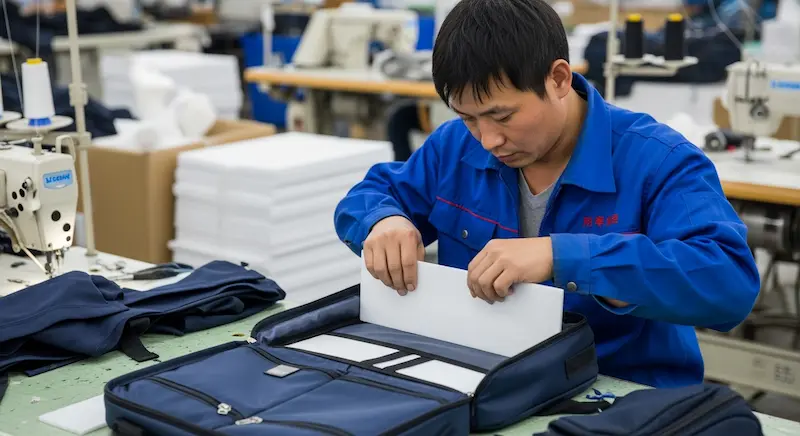
A base board or panel stiffener may help a bag hold its shape. Confirm the material, thickness, corner treatment, attachment and whether the component must be removable or flexible for shipping.
Interlining can change the body and feel of an outer fabric. Compare bonded and sewn-in constructions using the chosen fabric, and check the finished surface for stiffness, wrinkles or separation.
3. Use a Physical Sample—and Measurable Requirements
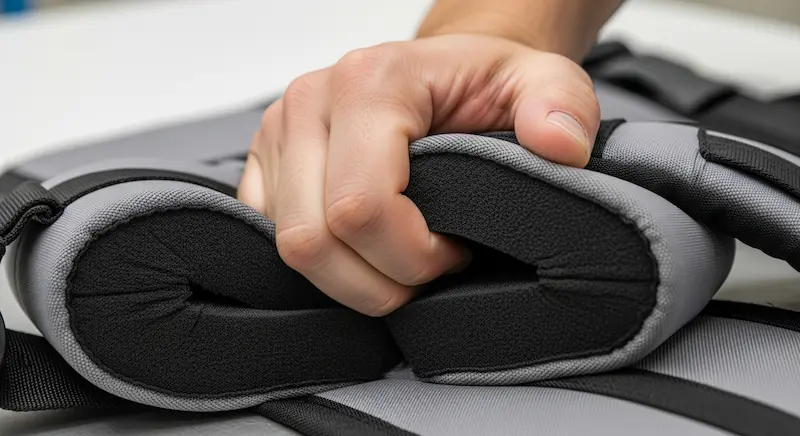
Feel the padded areas and assess them with the intended contents. Check for unevenness, hard edges, inadequate coverage and uncomfortable pressure points. These are useful observations, but touch cannot reliably identify a foam’s chemistry or establish its quality.
For repeat production, record the agreed material grade, thickness, density and hardness where relevant, including the measurement method and tolerance. Do not substitute an approximate density or hardness when the specification requires an exact tested material.
Recycled content is not inherently evidence of poor quality, and new material is not automatically suitable. Confirm composition and performance against the project requirements rather than relying on blanket “100% new foam” claims.
Make Internal Materials Part of the Approval
Include the internal layers in your tech pack and approved sample. Agree on any substitutions before production, and incorporate the relevant checks into the quality-control plan.
Send Timmy Bags your project details, including the items to be carried and any protection requirements. We respond within 24 hours.