
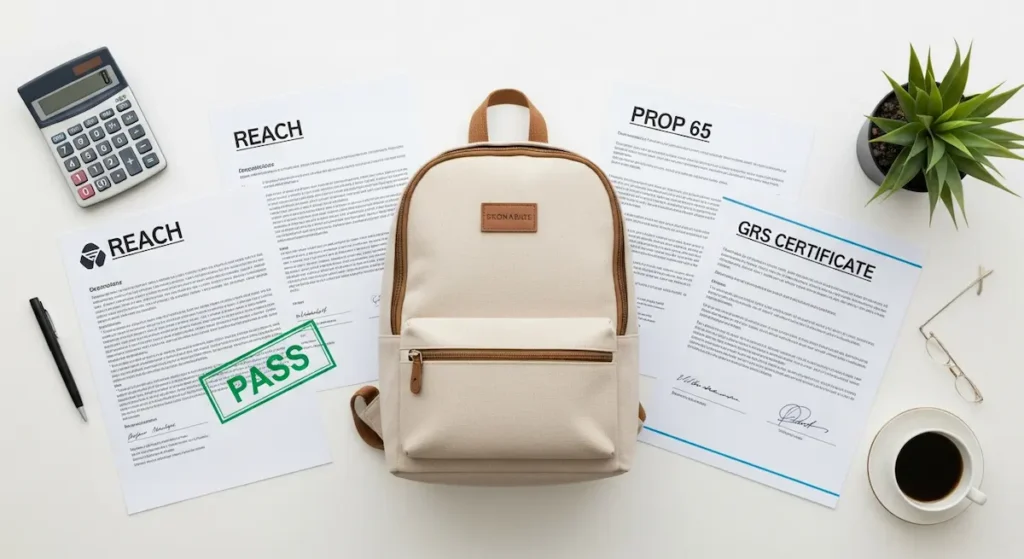
Bag compliance starts with the destination market, intended user and exact materials—not a general “certified factory” label. Fabric, coatings, printing, hardware, packaging and children’s use can create different requirements.
Use this guide to prepare questions for your importer, qualified testing laboratory and legal adviser. It is general sourcing information, not a complete legal checklist or a guarantee of market approval.
1. REACH: Restrictions and Candidate List Duties Are Different
REACH is the EU chemicals regulation. Its Annex XVII restrictions apply to specific substances, uses and conditions. A relevant laboratory should identify which restrictions and test methods apply to your bag and components.
The Candidate List is different: an SVHC above 0.1% by weight in an article can trigger information duties. It is not a universal rule banning every listed substance above 0.1%. Other notification or reporting duties may also apply depending on the circumstances.
Check ECHA’s restricted-substances information and Candidate List obligations. Specify the destination, current requirement and exact components before requesting testing.
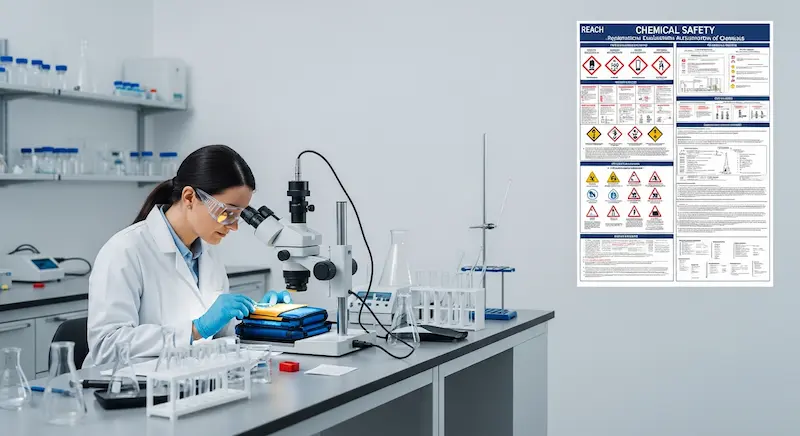
2. California Proposition 65: Assess Exposure, Not Just Presence
Proposition 65 concerns exposure to listed chemicals in California. Finding a listed chemical in a material does not, by itself, establish whether a warning is required. The exposure, applicable exemptions and warning requirements need assessment.
Do not treat a generic “Prop 65 compliant” statement as a substitute for a product-specific assessment. Ask your laboratory and legal adviser what evidence and warning approach are appropriate for the intended use. See the official Proposition 65 FAQs.
3. GRS: Keep Recycled-Content Claims Within Their Evidence
The Global Recycled Standard uses third-party certification and chain-of-custody requirements for recycled materials, with additional processing criteria. It does not prove that every environmental claim about a finished bag is justified.
Confirm the certified material, percentage, product and supply-chain scope, relevant documents and permitted claim before approving an order. Availability of certification or transaction documents must be checked for the specific project; it is not automatic for every Timmy bag.
See Textile Exchange’s explanation of recycled standards and our material-claims planning guide.
4. Children’s Products: Confirm Classification First
In the United States, products designed or intended primarily for children 12 years of age or younger may be children’s products. Applicable children’s product safety rules can require testing by a CPSC-accepted laboratory and a Children’s Product Certificate issued by the responsible importer or domestic manufacturer.
Discuss classification, applicable rules, labels and current import requirements before development. Do not assume a general-purpose bag test report covers a children’s backpack. Start with the CPSC’s certificate guidance.

Build the Requirements Into Your Project Brief
Share the destination, intended age group, materials, retailer requirements and any planned claims. Agree on test scope, sample selection, timing, costs and document responsibilities before production. A report only covers the samples and requirements stated in it.
Send your project brief to discuss the requirements with Timmy Bags. We respond within 24 hours. Product-specific compliance decisions should be confirmed with qualified specialists.