
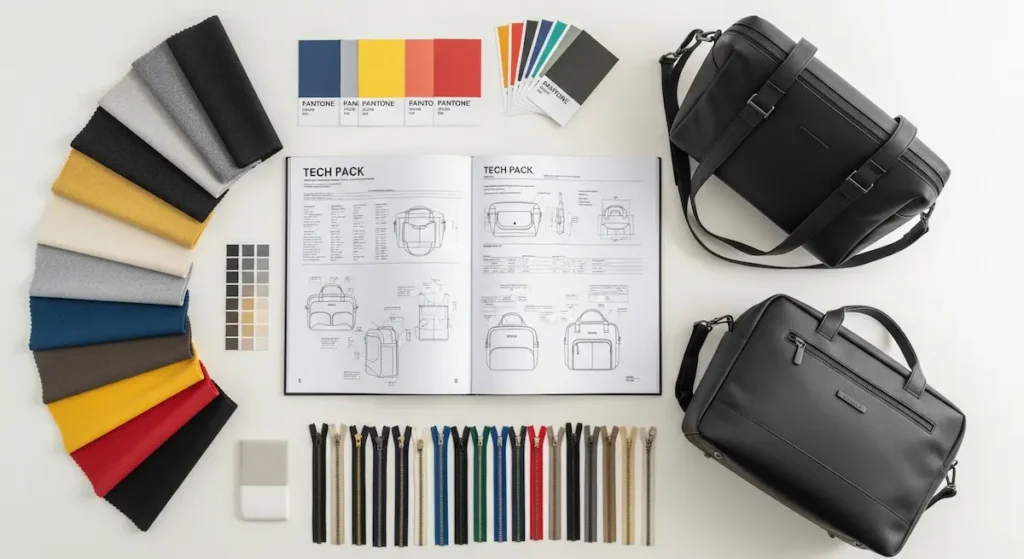
A bag tech pack brings the design decisions into one reference: what the bag should hold, how it is built, which materials it uses and what needs approval. It reduces ambiguity, but does not guarantee a perfect first sample.
If you do not have a complete tech pack, start with clear reference images and a list of requirements. Mark undecided details openly so they can be discussed before sampling.
1. Show the Shape and Intended Contents
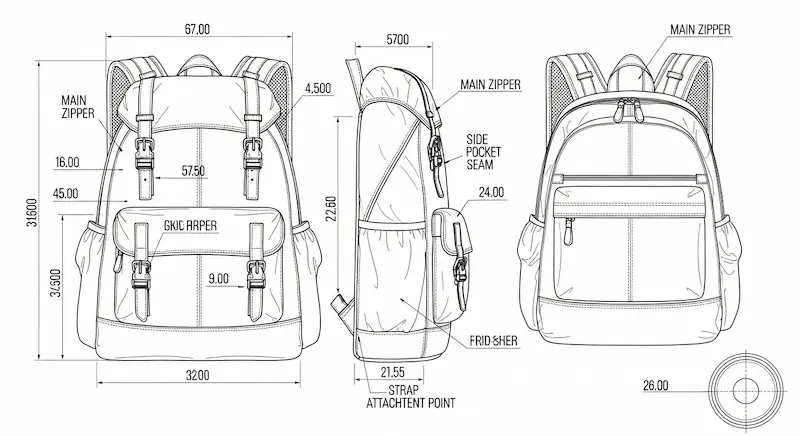
Include front, back, side, base and interior views where relevant. Show how the bag opens and how pockets, handles, dividers and closures are arranged.
List the products or items the bag must fit, with their dimensions. A cosmetic set should be reviewed with its bottles, brushes or packaging—not just the outer bag dimensions.
2. Define Measurements and Tolerances
State units and measurement points. For example, specify whether width is measured at the top opening or base and whether dimensions refer to the finished bag or a flat panel.
Agree on tolerances appropriate to the material and construction. For a size range, provide the measurements for each version rather than assuming every feature scales proportionally.
3. Build a Bill of Materials
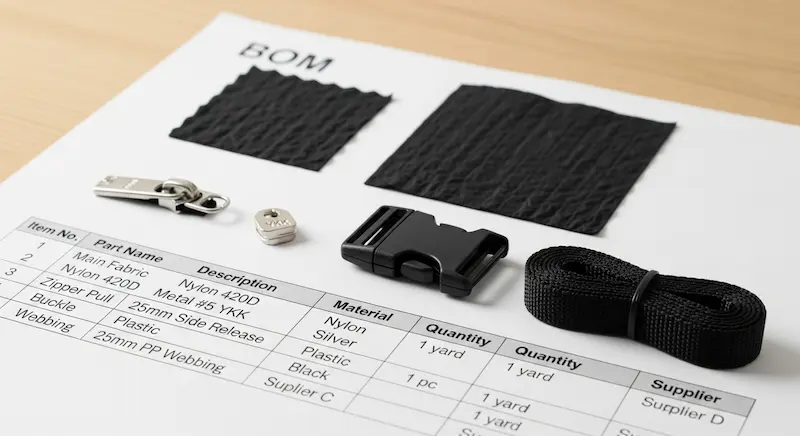
List the outer fabric, coating, lining, padding or stiffeners, zippers, hardware, thread, labels and packaging as relevant. Use material references or supplier codes where available.
For each item, distinguish the approved specification from an option still to be reviewed. A reference such as yarn denier or foam density should not be replaced by an approximate value when an exact tested material is required. See our fabric guide and padding guide.
4. Add Construction and Branding Callouts
Use arrows to identify seams, reinforcement, piping, binding, logo placement and attachment methods. Seam allowance and edge finishing are different details; specify each where required.
Provide logo artwork, dimensions, color references and position relative to a defined edge or seam. Review the method on the actual material. Read our branding guide.
5. Keep Versions and Approvals Clear
Give the document a date and version number. Record sample comments, accepted changes, remaining issues and who approved them. The tech pack supports the order documentation; it does not automatically replace the written sales agreement.
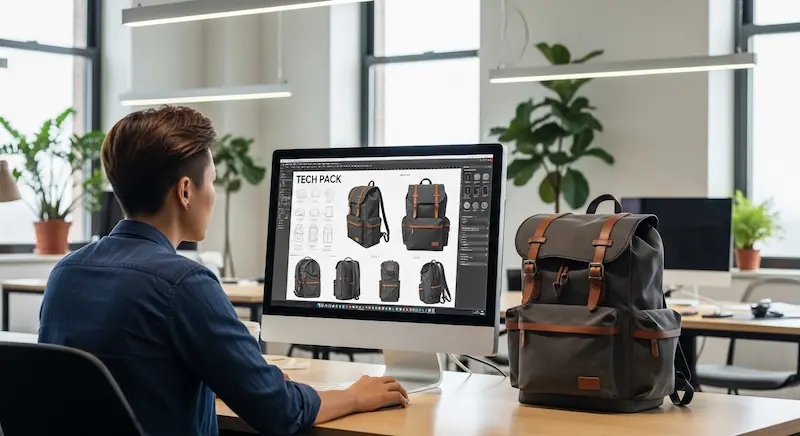
Timmy’s samples normally take 7–10 days after all details are confirmed. Unresolved details or later changes should be reviewed before promising a completion date.
Send your reference, estimated quantity and project details to discuss the next steps with Timmy Bags. We respond within 24 hours.