
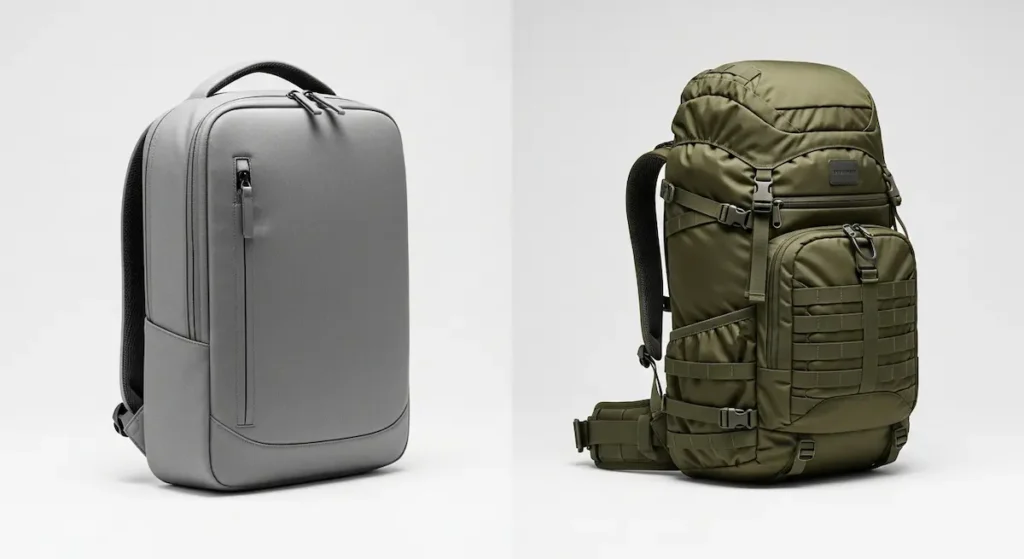
A backpack brief needs more than a capacity and a logo. The intended contents, carrying conditions and target user affect the fabric, compartment layout, straps and testing plan. Use this guide to prepare a more useful discussion with a custom backpack manufacturer.
1. Start with the contents and daily use
List the items the bag should carry, including their dimensions and approximate combined weight. For a laptop compartment, specify the actual device dimensions rather than relying only on a screen-size label. Describe whether the bag is for commuting, travel, events or occasional promotional use.
Agree how the laptop compartment, pockets and openings should work. A raised sleeve or padding may help protect contents, but neither makes a bag drop-proof. Any protection claim needs an appropriate test for the finished construction.
2. Compare complete fabric specifications
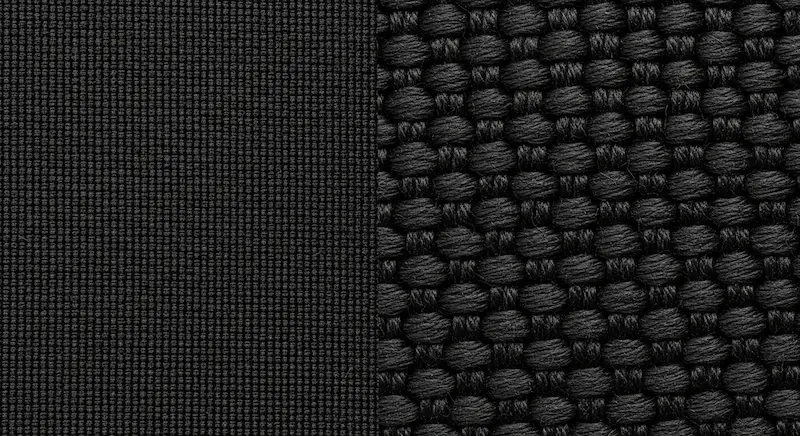
Ask about fibre composition, weave, fabric weight, coating and backing. Denier describes yarn linear density; a higher number alone does not prove that one finished fabric is stronger or better. Request swatches and compare the properties that matter for your project, such as abrasion resistance, flexibility, appearance and cleanability.
3. Review the fit, straps and organisation
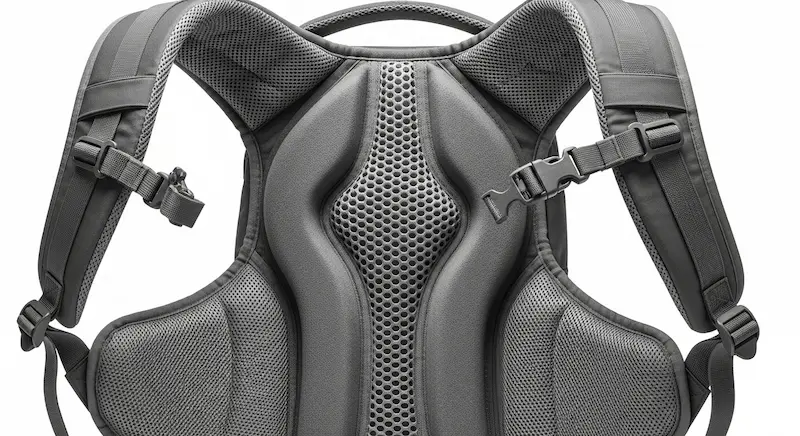
Check strap length, width and adjustment range on a physical sample. Review the back panel, padding and handle positions with the intended load. Comfort depends on the complete design and the user; mesh or shaped straps alone do not guarantee a comfortable fit.
For accessories such as a cable opening, confirm placement, included components and any applicable testing requirements. Avoid adding features that increase cost without improving the intended use.
4. Agree reinforcement and practical tests
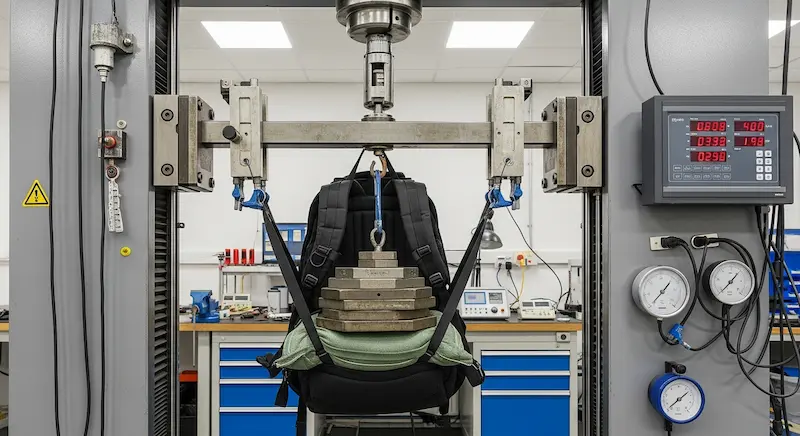
Identify stress points around shoulder straps, handles, seams and attachment hardware. Confirm the reinforcement method and inspection criteria on the approved sample. Set realistic load, carrying, opening-and-closing and drop-test conditions where relevant; record the acceptance criteria before production.
5. Prepare a complete enquiry
Send a reference or drawing, dimensions, target quantity, colour split, logo artwork and delivery destination. Ask which details need to be settled before sampling and what the quotation includes.
Timmy Bags’ standard MOQ is 500 pieces. For one style in multiple colours, the minimum is 300 pieces per colour with at least three colours. Sampling normally takes 7–10 days after all details are confirmed. Production normally takes 30–35 days after all details are confirmed; shipping time is additional.
Share your backpack brief or read about our quality-control process. We respond to enquiries within 24 hours; a complete quotation may require further specifications.