
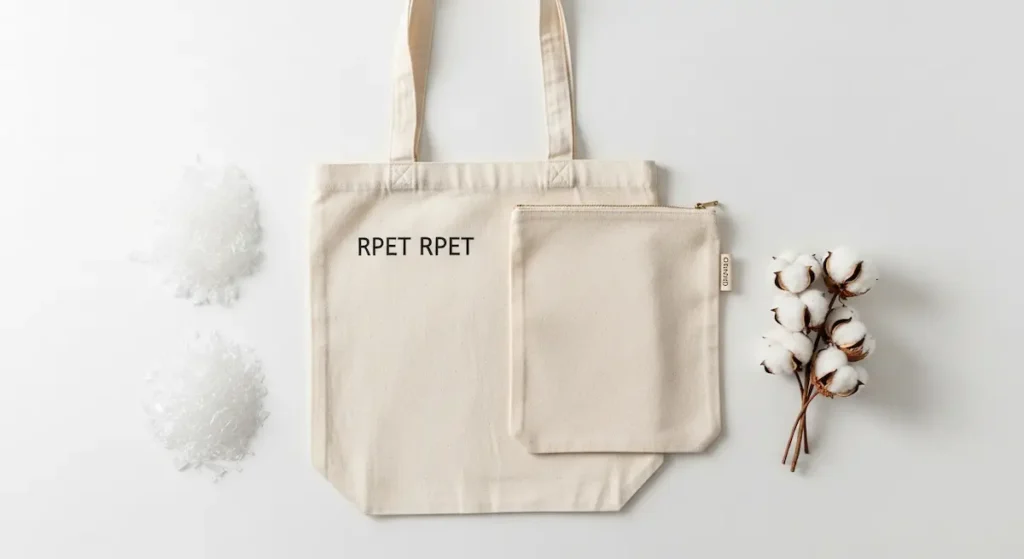
For a custom bag project, start with a specific goal: documented recycled content, longer useful life, less packaging or a material required by your customer. A broad “eco-friendly” label is less useful than a clear, supported claim.
This guide explains what to compare and what to confirm before printing environmental claims on your bag or packaging. It does not imply that every Timmy product uses certified or recycled materials.
1. Compare Materials for the Intended Use
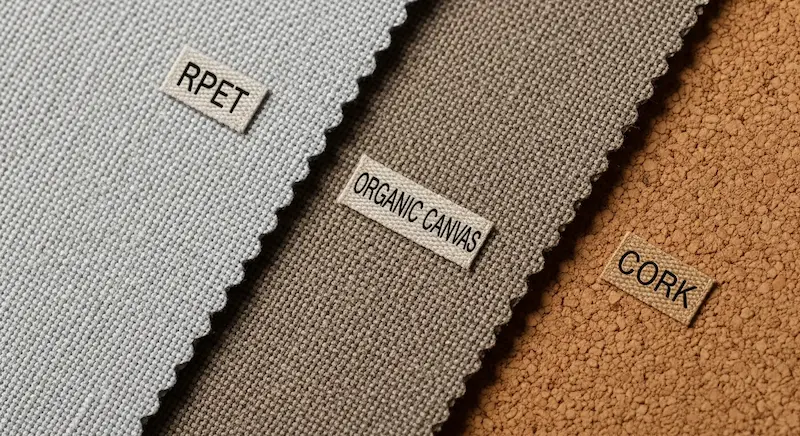
Recycled polyester (rPET): Ask for the recycled percentage, feedstock information and relevant supply-chain documents. Fabric weight, coating and construction still determine how the bag feels and performs. Do not convert a bag into a claimed number of recycled bottles without a documented calculation.
Organic cotton: Confirm the actual organic content and certification scope. “Organic” is not the same as chemical-free, and it does not automatically describe the lining, print, zipper or entire finished bag.
Recycled cotton or blends: Compare the stated composition, hand feel, strength, color and logo result using a project sample. The material name alone does not establish a lower overall environmental impact.
2. Match Each Claim to the Right Documents
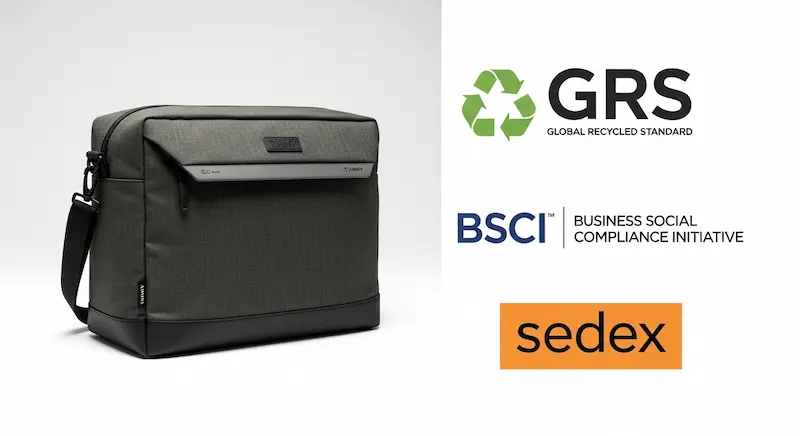
For recycled content, check the product and supply-chain scope of the applicable certification and the documents available for your order. Textile Exchange’s recycled standards address recycled materials and chain of custody; they are not blanket approval of every sustainability claim.
For organic content, ask which standard applies and what parts of the product it covers. Textile Exchange’s Organic Content Standard is one reference for verifying organic material through the supply chain.
Factory social audits serve a different purpose from material certification. Sedex’s SMETA is an audit methodology, not a product certificate or a pass/fail guarantee. Review the audit scope and findings rather than treating a logo as proof of every working condition. See Sedex’s introduction to SMETA.
Timmy’s factory-audit information and project material documents should be considered separately. Availability of a certified material, transaction document or label claim must be confirmed for the specific project before commitment.
3. Consider Packaging Without Overclaiming
Compare the protection needed in transit with the amount and type of packaging. Paper, recycled plastic and compostable options have different requirements; none should be selected on a label alone.
“Compostable” and “biodegradable” claims need evidence and appropriate conditions. State whether specialist facilities are required and avoid implying that a package will readily break down in any disposal environment. The FTC’s environmental-claims guidance provides a useful US reference; other markets may have different rules.
Agree on packing dimensions and protection before comparing freight quotations. Reduced volume may help shipping efficiency, but a carbon-reduction or cost-saving percentage requires a defined comparison.

Plan a Clear Material Brief
Share the intended use, quantity, target market, preferred material and exact claim you want to make. Review samples and documents before approving the specification and artwork.
See our manufacturer-selection guide or discuss a project with Timmy Bags. We respond within 24 hours.